NL
NLJohn Stoffers from restaurant First in Zeist presents an ode to farmed turbot
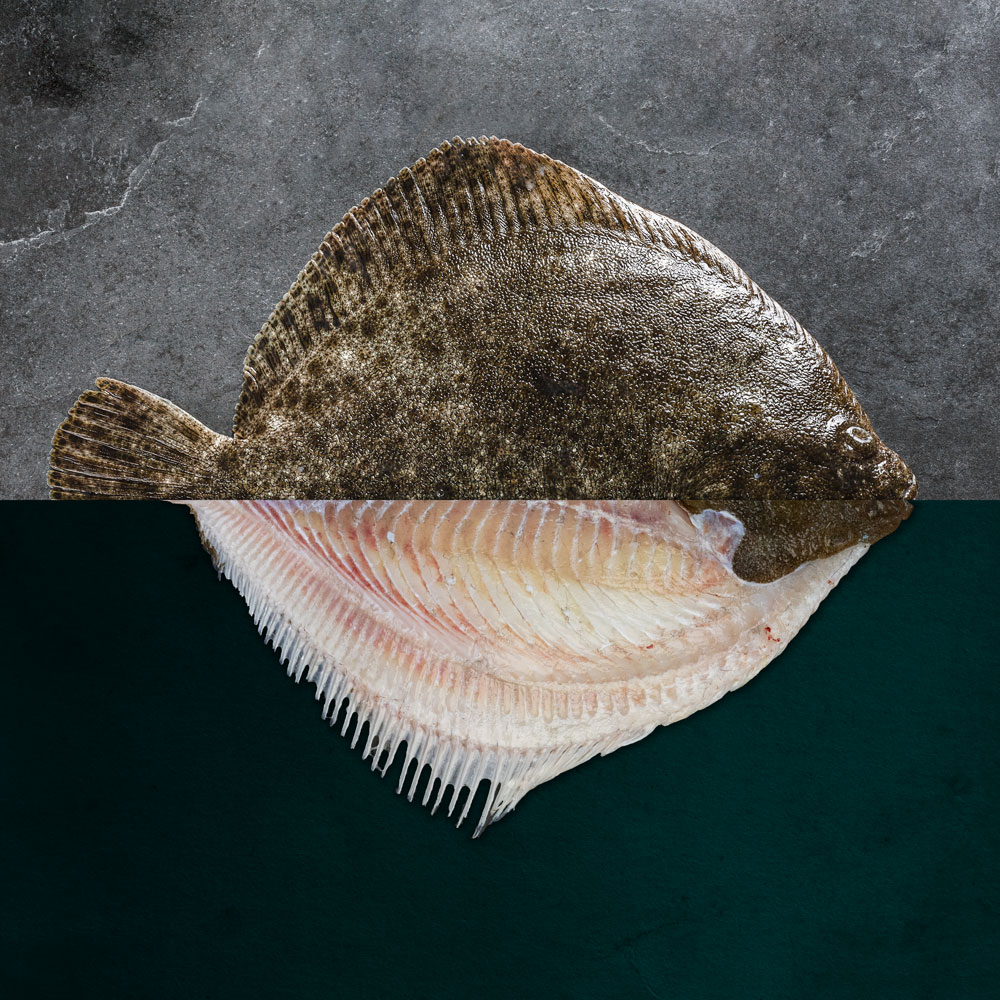
In recent years, the quality of farmed turbot has improved tremendously. We can now source beautiful farmed turbot that hardly falls short in taste and texture compared to wild turbot. These are positive developments at a time when the supply of freshly caught, more expensive (flat)fish such as turbot is regularly stagnating due to various factors. Consider catch restrictions or high fuel costs, which prevent fishing vessels from setting out. Although we would love nothing more than to supply wild (flat)fish, we see an increasingly important role for farmed fish in the future—provided it is farmed responsibly.
Firm Flesh and Pure Flavor
It is all the more pleasing that, alongside wild turbot, we can obtain farmed turbot with beautifully firm flesh and a pure flavor that is not muddy. Not only is chef John Stoffers from restaurant First in Zeist a fan, but many other customers (in the top segment) now also prefer our farmed turbot. The taste is comparable to wild turbot, the sizing is consistent, and it is significantly more affordable than wild turbot. We can supply this farmed turbot, as you have come to expect from us, in all sizes—from small to large, whole or as fillets.

John Stoffers, chef-owner of restaurant First in Zeist
Since 2007, John Stoffers, together with his (guest) wife Monique Duvivier, has been the owner of restaurant First in Zeist. The 51-year-old chef was trained in the classical kitchen and has worked at establishments such as De Kersentuin in Amsterdam and Groot Paardenburg in Ouderkerk aan de Amstel. The kitchen at First is an honest, seasonal kitchen with a classic French foundation, featuring recognizable products on the plate and an emphasis on sustainability.
Sustainability
Sustainability is evident in both dishes that John created for us. In the dish with fried turbot, he uses every part of the turbot, and in the poached turbot dish, he incorporates the leftover tomato seeds that he needed for another dish.
Between bites, he offers an energy-saving tip when making the sweet potato emulsion: roast the potatoes a day in advance during service in the warm oven you already have on. The next day, peel them before making the emulsion.
Top-Quality Farmed Turbot
John loves working with farmed turbot. John Stoffers: “The farmed turbot from Driessen is top quality and has consistent sizing, which makes it very economical to work with. Additionally, it has firm, slightly fatty flesh and is incredibly tasty. Farmed fish is really on the rise, and if the quality is good and it contributes to a better world, I am happy to work with it.”
Short Communication Lines
John Stoffers: “I work with a daily-changing surprise menu. For fish, I have almost daily contact with fish specialist Lucas Kramer from Driessen. He advises me on what is in season and what currently offers a good price and quality. This way, I can provide my guests with the best quality and still maintain reasonable margins. I have been sourcing a large part of my fresh products from Driessen for over ten years. The quality of the assortment is excellent, and I appreciate that it is a family business with short communication lines, where the team and owners are easily reachable. And practically speaking, it is nice to receive all my fresh deliveries on one invoice.”
John created two dishes with farmed turbot for Driessen: one dish featuring fried turbot in which he uses every part of the fish, and another dish with poached turbot.
Fried Turbot with Asparagus and Sweet Potato Emulsion
- Brown the bones of the turbot in the oven and make a classic jus de veau (but from bones) with them.
- Fry the skin between greaseproof paper in a small pan, then finish crisping it in the oven.
- Prepare crispy fennel by thinly slicing raw fennel on the slicer and soaking it in ice water for a few hours.
- Prepare green or white asparagus.
- Make a sweet potato emulsion by roasting the potatoes in the oven and then blending them in a thermoblender with olive oil, salt, and pepper.
- Fry the turbot.
- Plate the dish as shown in the photo.

Poached Turbot with Spinach, Beech Mushroom, Gnocchi, and Choron Sauce
- Make gnocchi.
- Sauté spinach with some butter.
- Sauté beech mushrooms with some butter.
- Prepare choron sauce. John Stoffers makes choron sauce by adding a tomato reduction to a hollandaise sauce. He makes the reduction using leftover tomato seeds in the thermoblender. The resulting tomato juice is strained. An onion is sautéed, to which some tomato paste and the tomato juice are added. The mixture is reduced and then incorporated into the hollandaise.
- Dredge the turbot fillets in olive oil, salt, and pepper. Poach them for a few minutes in the combi-steamer at 80 degrees (without moisture).
- Plate the dish as shown in the photo.